×


Micro-credentials and short-term educational programs: the case of the program "Psychological safety of the educational environment"
In the context of rapid updating of professional competence requirements, short-term educational programs and micro-credentials are beginning to play a special role. They allow you to quickly acquire applied skills that are in demand in a modern educational environment.
One of the successful examples of this practice was the microqualification program "Psychological safety of the educational environment", implemented by the Department of Psychology of the Karaganda National Research University. academician E.A.Buketov this year.
The purpose of the program is to develop the competencies necessary to create and maintain an educational environment that ensures the psychological security of all participants in the educational process.
During the course, special attention was paid to:
• preservation and strengthening of psychological health;
• Developing stress management and emotional resilience skills;
• Creating an atmosphere of trust, respect and cooperation;
• reducing the risks of conflict and stressful situations.
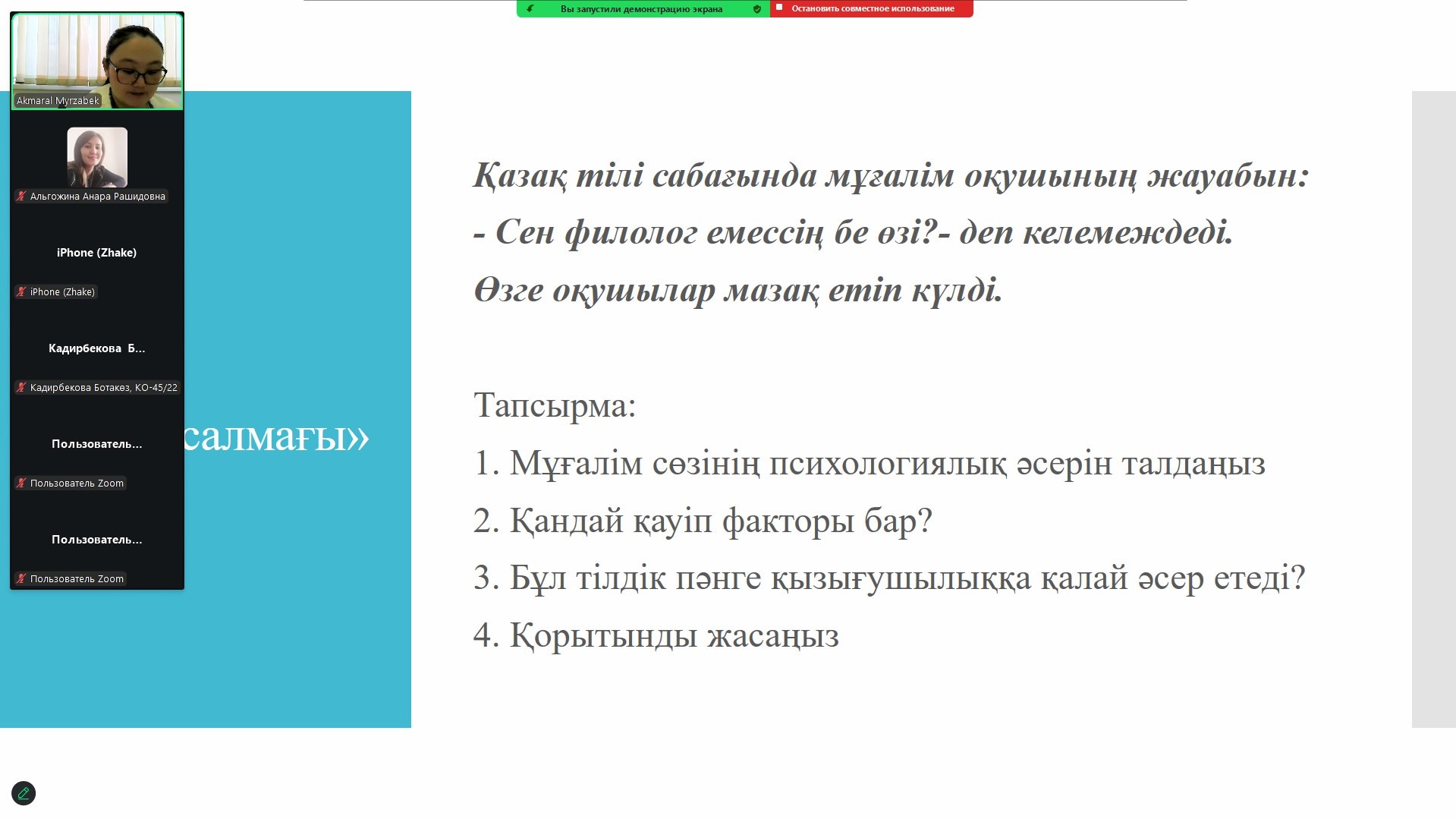
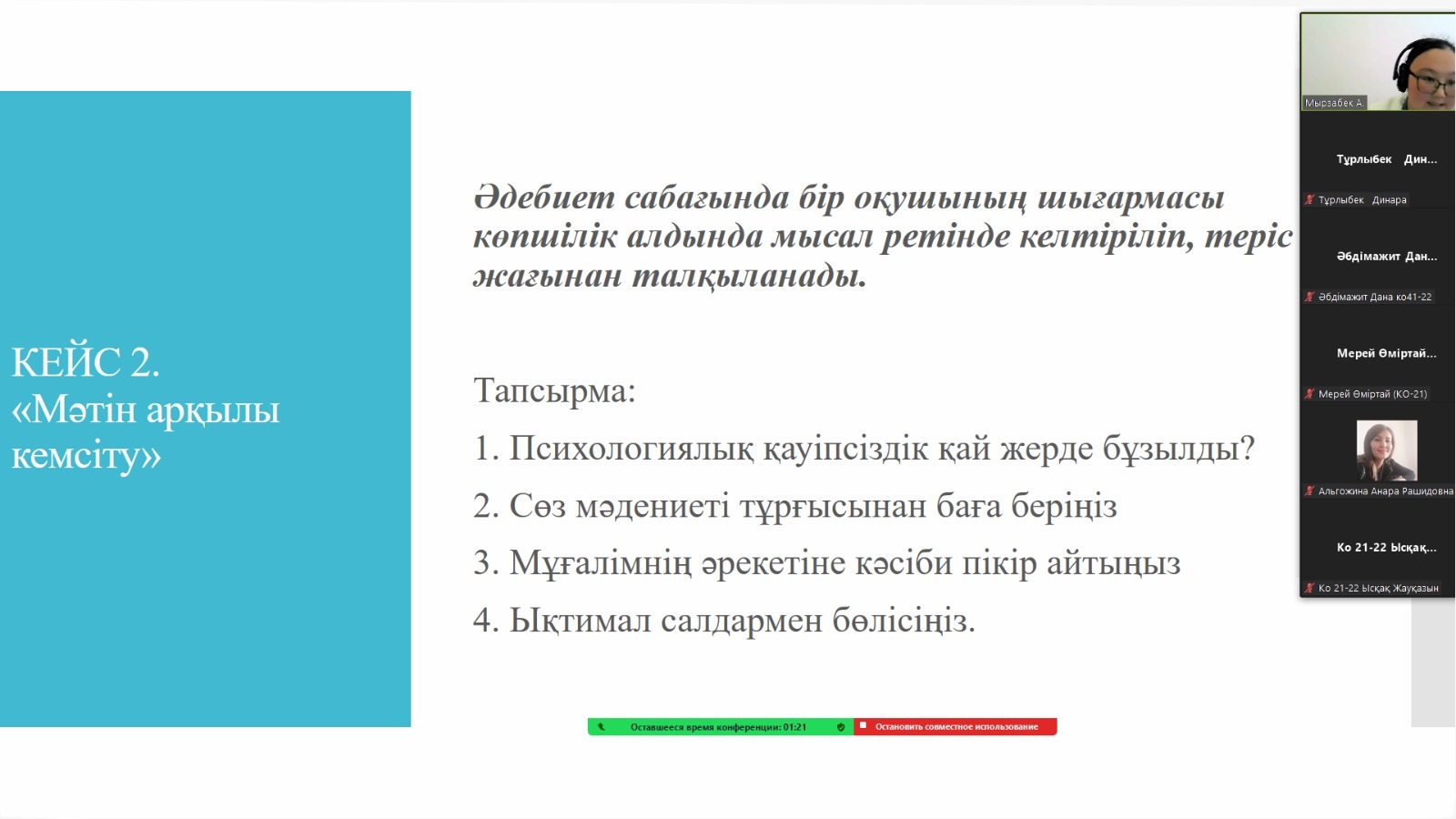
The program was characterized by a pronounced practical orientation: participants worked with real cases, mastered diagnostic tools and support for psychological well-being, and worked out algorithms for responding to difficult situations.
Key implementation results:
• increasing the level of psychological stability of participants;
• reduction of anxiety symptoms;
• formation of practical skills to support psychological well-being;
• Improving the quality of interaction between participants in the educational process.
The course implementation has demonstrated that the micro-credentials format is an effective tool for the operational development of professional competencies and can be successfully applied in the education system.
The program has become an important step towards creating a safer, more supportive and productive educational environment.